Went to the Georgia O'Keeffe Museum
We visited the Georgia O'Keeffe Museum in Santa Fe. It's pretty small, but they're building a much larger facility a few blocks away right now. In fact, we saw them having some sort of construction meeting next to a weird materials test structure behind the fence:
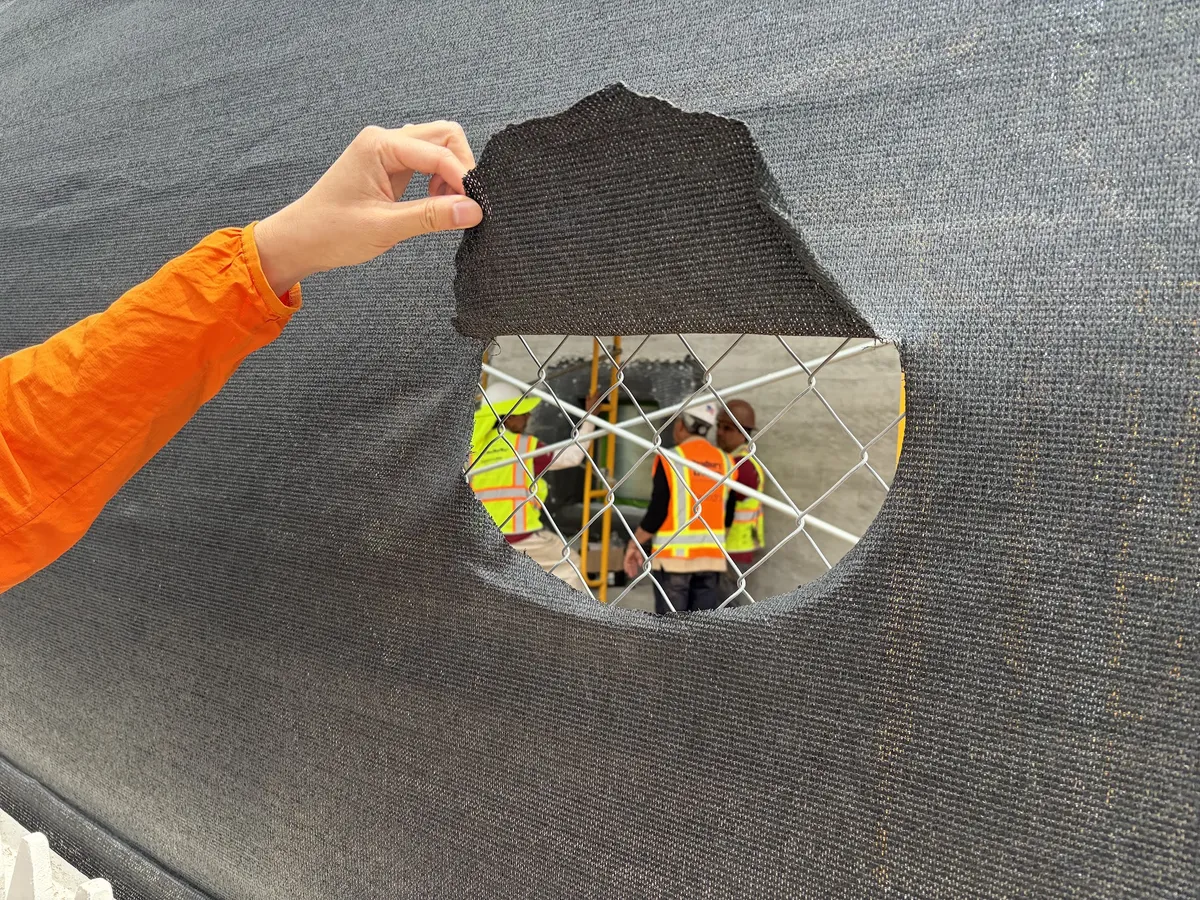
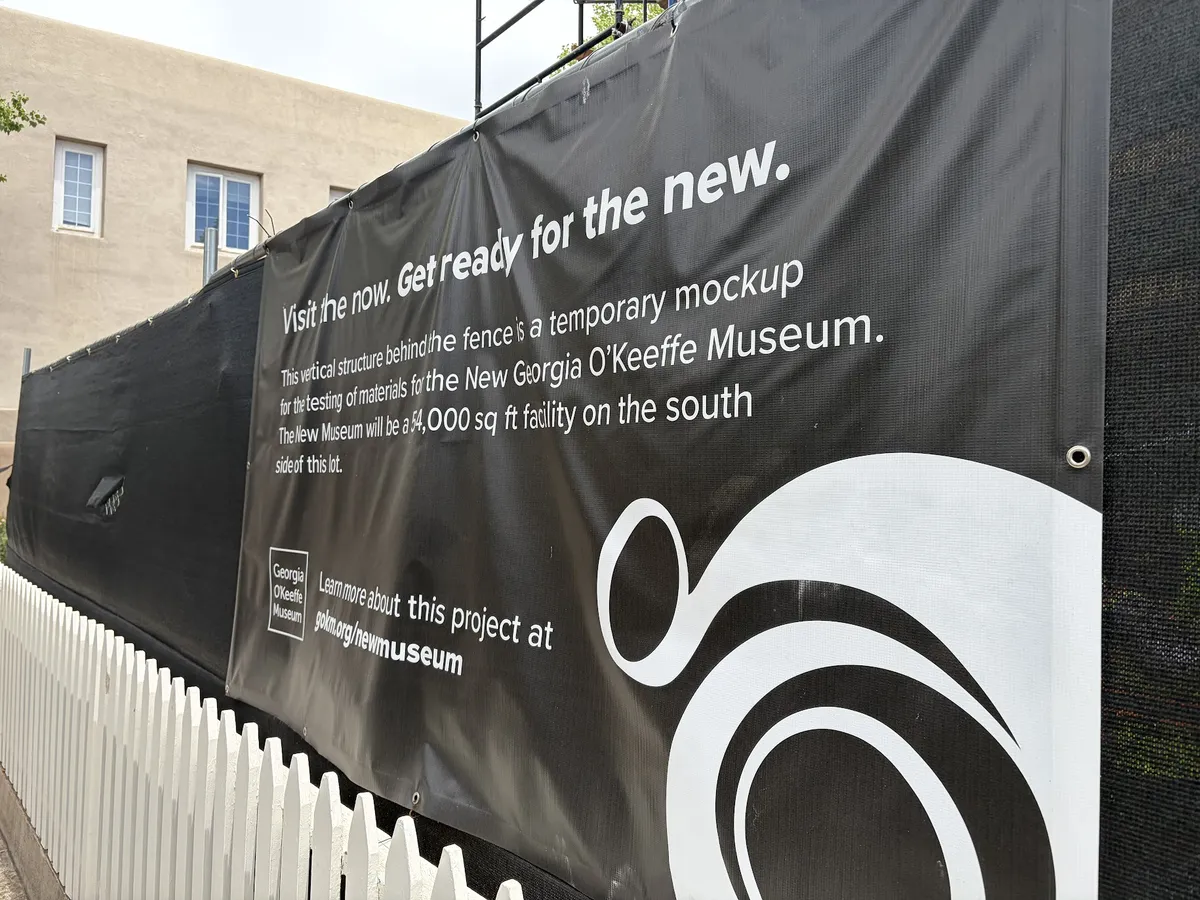
This vertical structure beind the fence is a temporary mockup for the testing of materials for the New Georgia O'Keeffe Museum. The New Museum will be a 54,000 sq ft facility on the south side of this lot.
The current museum is small enough that it's pretty packed at all times. We were there midday on a weekday and there were probably more than ten people in most of the (relatively small) main gallery rooms at any given time. She's still popular!
The first several gallery rooms had a lot to say about whether her plant paintings were sexual or not. I remember walking through I think three different rooms, back-to-back, which all had text on the walls about O'Keeffe denying that her plant images were sexual. Some of them were pretty adamant that it was men who were applying the sexual read to her plants.
I don't doubt that this is all true! These people are the O'Keeffe experts. But I strongly remember a friend of mine in middle school, a girl, asking me, "Do you know who Georgia O'Keeffe is?" during class, and my teacher saying, as he anticipated the direction of the conversation, "Hey now," and then my classmate announcing that O'Keeffe was "A woman painter who painted vaginas!!" I and some other students later went on a school computer and looked up O'Keeffe, and everyone present - all girls - agreed that she was very obviously painting plants in order to paint vaginas. So I think the interpretation applied by the male art critics of the 1920s may be pretty universal.
There is a kind of smugness you can access by pretending to understand the psyche of an artist better than they understand themselves. I apologize for the comparison, but the best recent example of this is absolutely the Twilight franchise, which is just Stephenie Meyer excavating a massive pile of unexplored feelings about gender and power, then leaving them out for the audience to gawk at. There is something very attractive about an artist who fails to understand what their work is doing, or an artist who constantly denies the impact their art is clearly having. It makes them much more interesting, I think.
If you are an art critic or historian who knows more about O'Keeffe than I do, or if the challenge of interpreting the plants as merely plants is more intellectually intriguing to you, then I probably sound like an idiot. But it is a lot of fun to look at art which seems to be saying something, and then to read a little inscription next to it which says, "NO!!! This is NOT what you think it is!!! It's your fault if you think this looks like THAT!!!" I think it really enhances the art, personally, to have your read of it rejected so firmly by the presentation. It makes the artist more interesting and mysterious.
Anyway, I spent much of my time at the museum examining this reaction in myself. I was surprised by how clearly I could recall standing around the computer in the back of the classroom and thinking, "Oh boy. Yes. That's a vagina. Wow. She just painted that! Wow!"