Another invasive plant: tuckeroo
Tuckeroo is an Australian tree commonly used as a landscaping tree in Southern California and Florida. Chances are that you have never seen it if you don't live on the east coast of Australia, the Los Angeles area, or in Florida south of Daytona Beach.
I hope this story will be interesting to you anyway, however!! I think tuckeroo was an interesting plant for me to learn to recognize, and I think you'll notice some similar plants wherever you live, too.
Tuckeroo has light-colored grey bark and loads of long, leathery, dark-green leaves. Check out this great Wikimedia Commons picture here. (I don't have a good picture to post myself because my house is in almost all the ones I have on hand.)

When planted as a sidewalk tree and maintained by arborists, that thick canopy is excellent at throwing shade, which is probably why it's so common in SoCal. Here's a great iNaturalist observation which shows how well this tree can shade an area. Here's another one. I don't begrudge the tuckeroos I see around me in the city because they're so excellent at cooling the streetscape.
But it also bears bright orange fruit... and animals love that shit. They eat it and poop the seeds out all over the place. So it scatters everywhere, and grows as a weed:

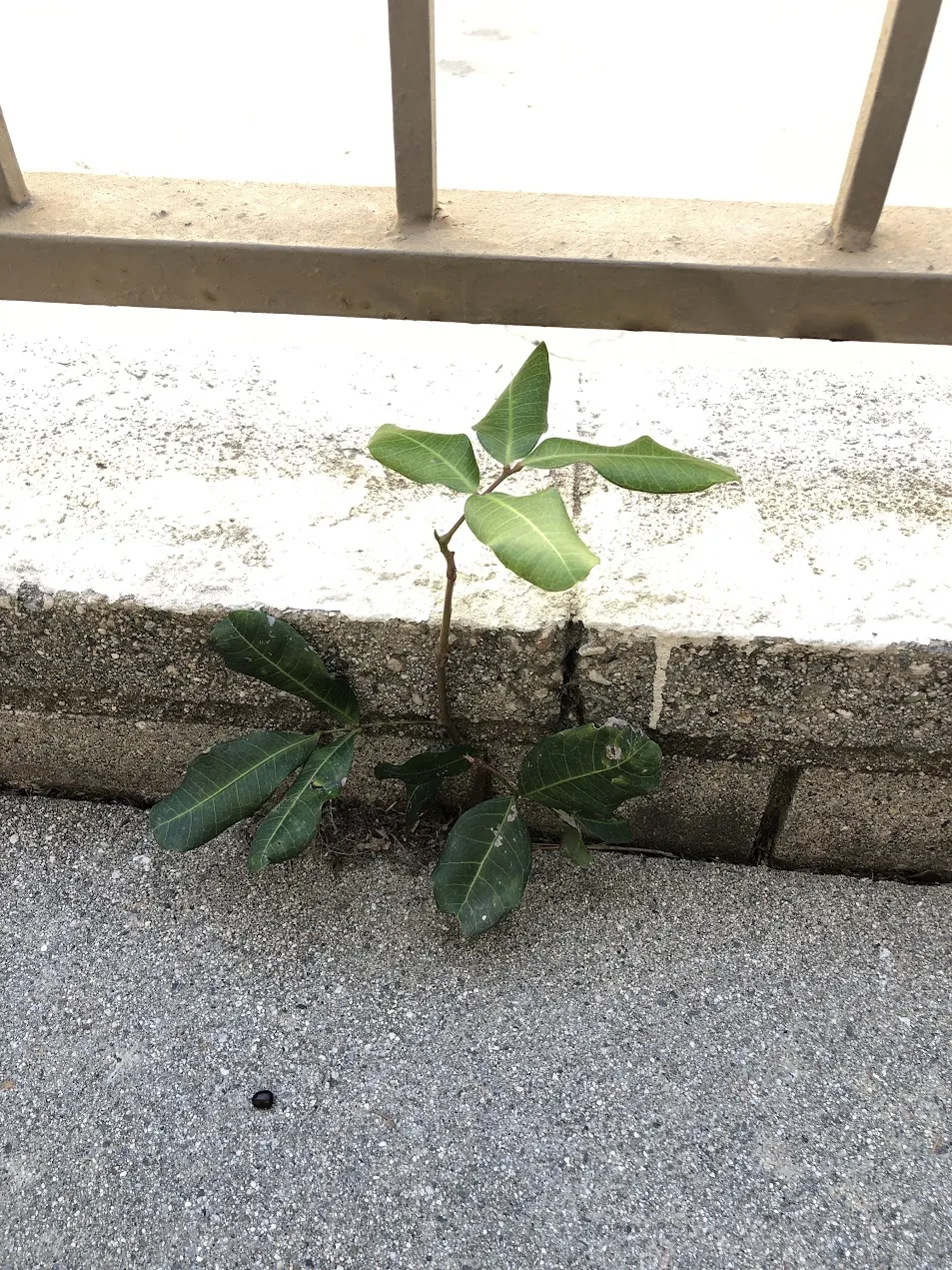
They pop up in cracks in the sidewalk, in gaps in brick walls, and in all sorts of places you'd never expect to find them. I often find them growing in drains. Here's one growing out of a flood control tunnel:
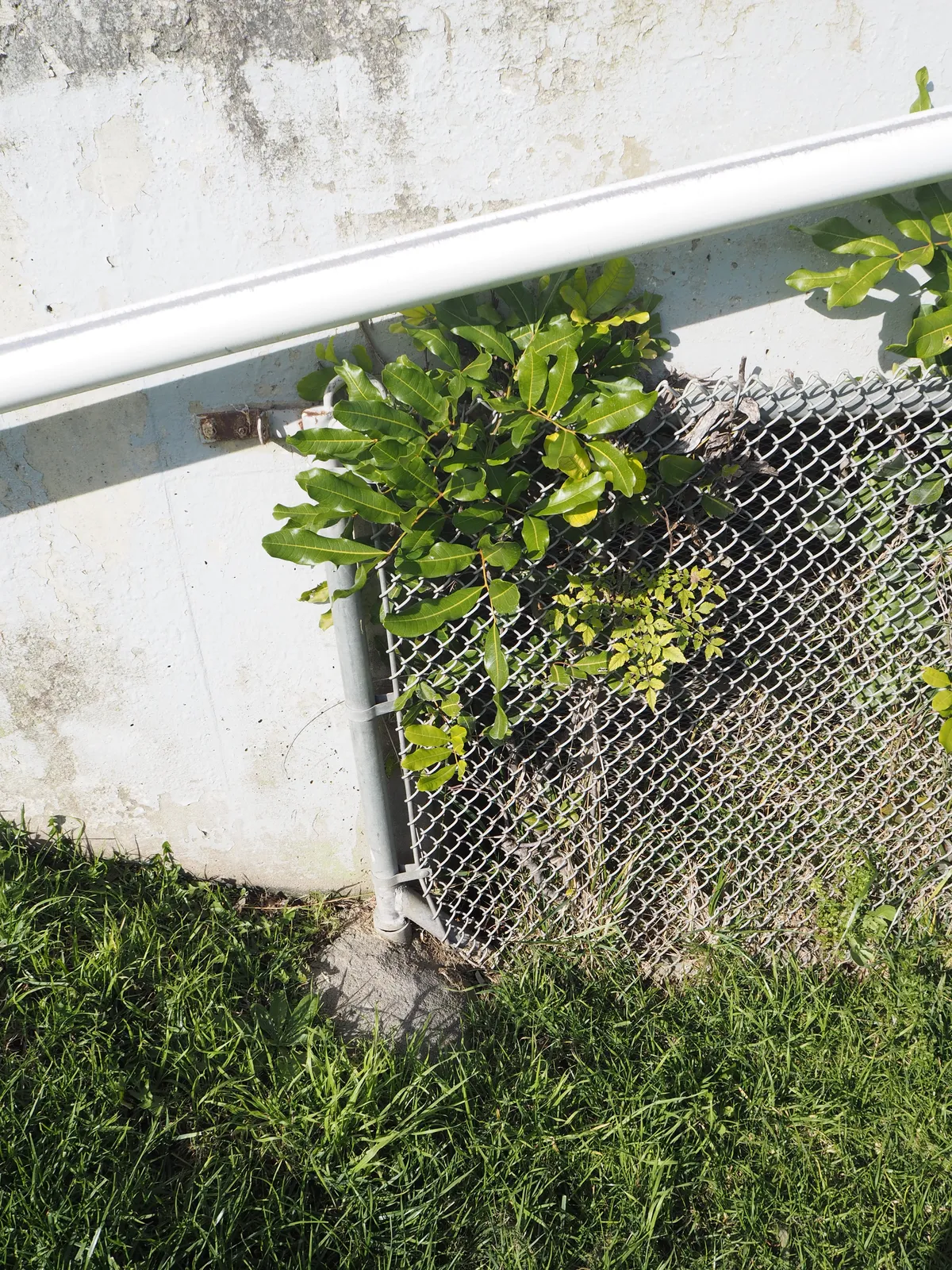
Here's a person-sized tree growing alongside the protection of a chain-link fence... the eternal home of all earth's cleverest weeds:
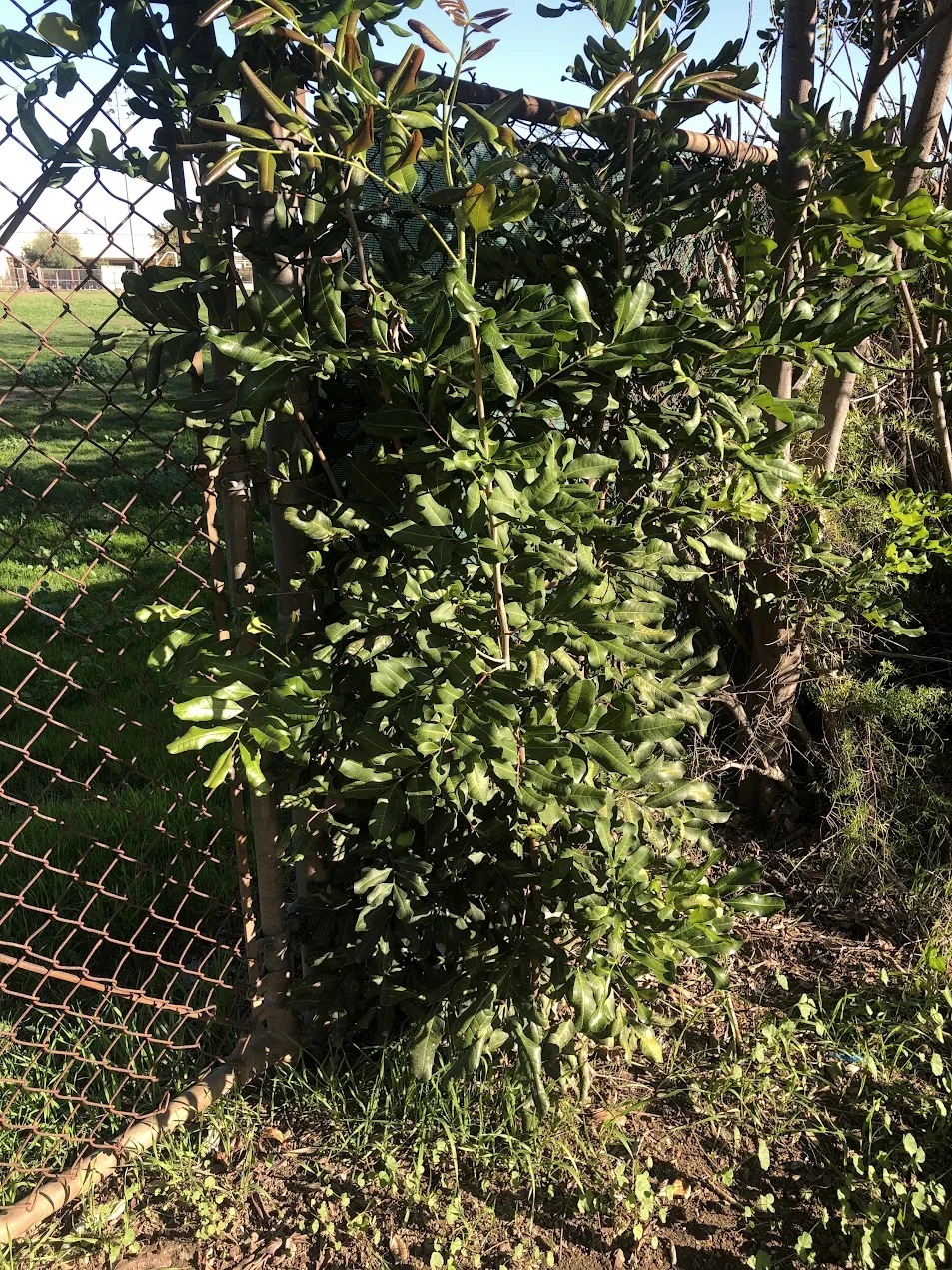
I now see this tree absolutely everywhere. But I wasn't even able to "see" it before I got interested in identifying plants... and even then it, took me maybe a year to realize that the little weed I was taking photos of in cracks next to the sidewalk was actually the same thing as the huge fucking bigger-than-a-house trees growing outside my home or my job. iNaturalist does not accept photos of cultivated plants as "research grade," so I was looking for wild plants and deliberately avoiding any photos of landscaping trees. And because I wasn't actively learning to recognize tuckeroo specifically, it never occurred to me that they were even the same plant!
It's crazy how you can be plant-blind to some plants at the same time that you're deliberately trying to learn to notice others!
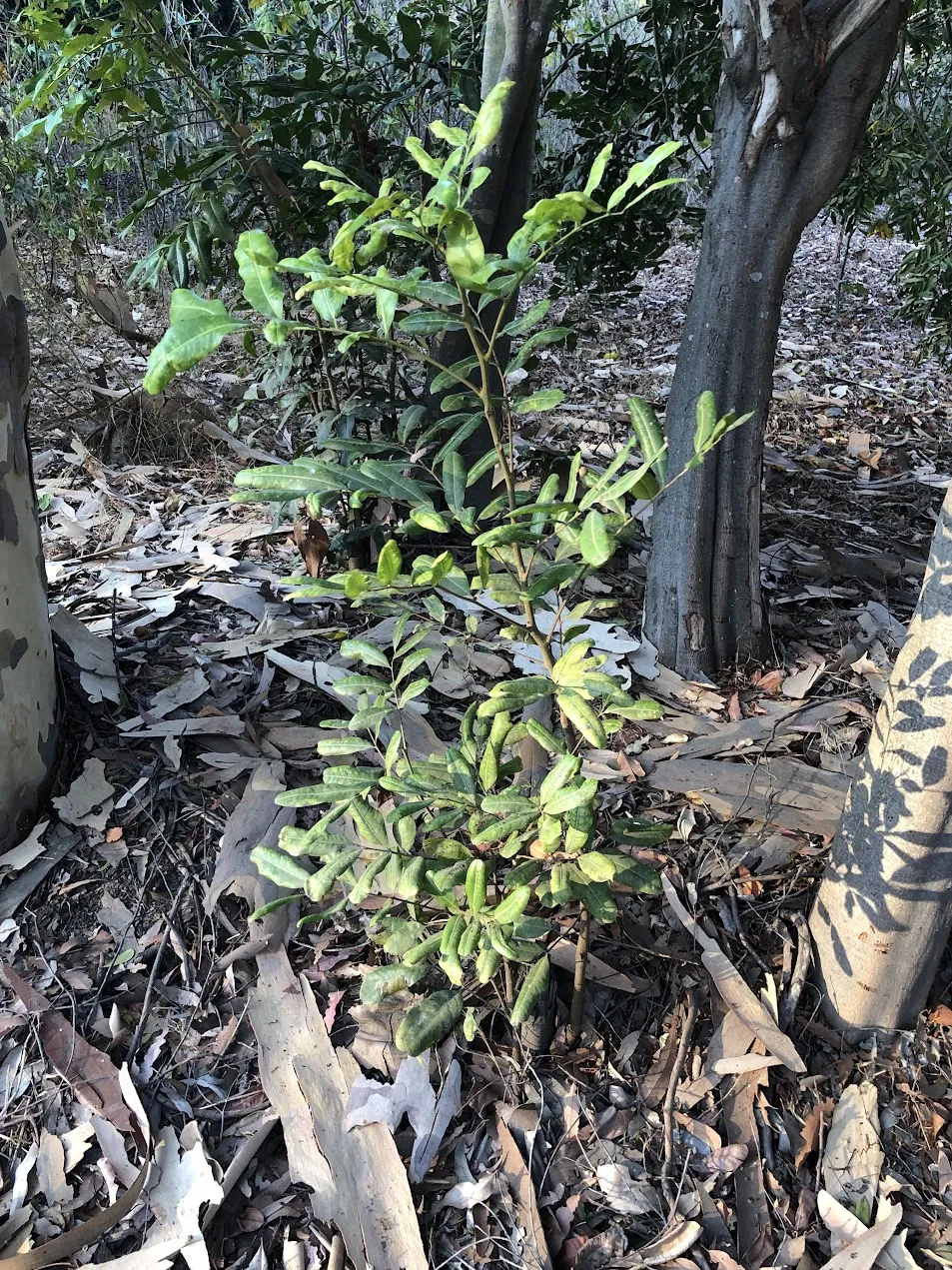
Plenty of landscaping plants escape containment and become invasive. Some of them, like Tree of Heaven, are so visually distinctive that it's easy to notice the similarity between a young plant and an established one. Other plants, like tuckeroo, look so profoundly different when they're maintained as landscaping elements that it was hard for me to notice the similarities. Maintained tuckeroo growing next to a sidewalk usually has one distinctive, light-grey central trunk that branches above my head. Wild tuckeroo is usually younger, looks like a bush, and won't have that big, well-trimmed whitish trunk for me to notice. I only started noticing that they both were the same plant when I took this photo of a sapling that was starting to look distinctly tree-like:
Tuckeroo can be a kind of weird sidewalk weed in LA, but in Florida it is a proper invasive that grows in forests and is actively being removed from a lot of places. I've never seen a tuckeroo in SoCal anywhere outside of the city - I think it needs more water than it might get in our drier natural areas. I do see it growing in forested areas in local parks, though.
I'm sure there are plants near you which are sneakily being invasive in ways you wouldn't normally notice. When I realized that these were the same plant, I felt extraordinarily stupid... but I had to remind myself that "noticing plants" is actually pretty hard to do even when you are trying to do it intentionally. And it's even harder when you're used to seeing a plant only in the way that it looks when humans are actively sculpting it to their needs!